7 Stages of Hair Loss Every Man Should Know
The worst scenario is noticing the hairline which is not the same as it used to be. However, it is important to remember that hair loss is not an overnight transformation. It is typically a gradual process that reveals itself over years.
Whether you are just noticing a few changes or are concerned about male pattern baldness stages, by understanding the 7 stages of hair loss, you can shift from anxiety to action. Recognizing these patterns early allows you to take control of your hair health.
Stage 1: Normal Hairline
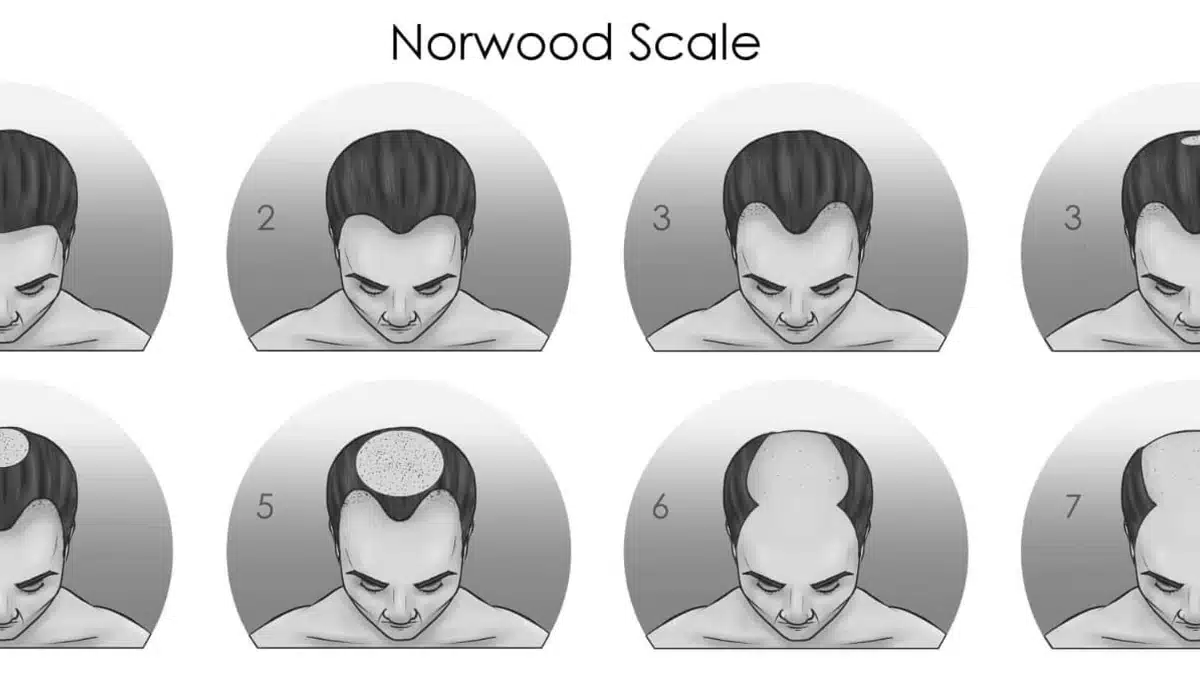
At this stage, your hair-line is exactly where it should be naturally. There is no backward shifting at the temples and your density remains consistent across the scalp.
It is normal to shed between 50 to 100 hairs a day. This is part of the natural growth cycle where old hairs fall out to make room for new ones. If your hairline hasn’t shifted and your scalp feels healthy, there is generally no need to worry. Monitoring your hair density once in a while is a healthy habit, but stage 1 is considered full, baseline coverage.
Stage 2: Mature Hairline
Many men reach their twenties and notice their hairline has shifted back slightly. This is often known as a “mature hairline.”
In many cases, this is not the start of aggressive balding; it is simply a natural maturation of the hairline. The change is usually subtle, often just a few millimeters backwards around the temples. Unlike early hair loss, a mature hairline typically stabilizes and does not continue to recede rapidly. If you notice this change, keep an eye on it, but don’t jump to conclusions just yet.
Stage 3: Early Noticeable Hair Loss
This is the stage where the Norwood scale officially identifies the start of male pattern baldness. You will notice a deeper recession at the temples, often creating an “M,” “U,” or “V” shape.
At this point, you might also notice the very first signs of hair thinning at the crown or the “vertex.” Because this is the phase where progression becomes visible, early intervention is vital. Genetics and hormones like DHT (dihydrotestosterone) often play a major role here. If you catch it now, you have the best chance of slowing the progression.
Stage 4: Moderate Hair Loss
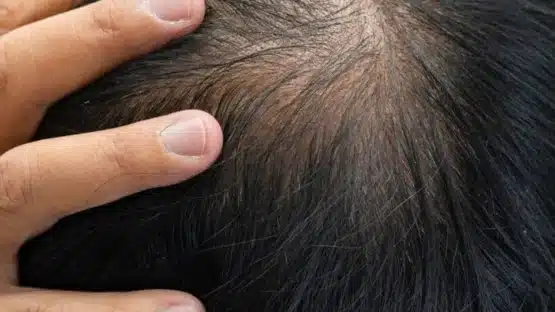
The hairline has receded significantly and the thinning at the crown is now quite obvious.
A bridge of hair may still exist between the front and the back, but it is likely becoming thinner. This stage is a common turning point for many men. Factors like high stress, poor nutrition and hormonal imbalances can sometimes accelerate the transition from stage 3 to stage 4. It’s a good time to look at your lifestyle habits and consider a professional evaluation.
Stage 5: Advanced Hair Thinning
Here, the “bridge” of hair connecting the front and the crown is either broken or extremely thin. The two areas of hair loss: the temples and the vertex, begin to merge into one large bald area.
At this level, the density of the remaining hair is greatly reduced. Styling becomes more difficult as there is less coverage to work with. If you find yourself spending more time trying to cover thinning spots, it is a clear sign that the hair loss progression is advanced.
Stage 6: Extensive Hair Loss
Now at this stage, the hair loss is substantial. The bridge of hair is almost entirely gone and the bald areas at the front and back have joined completely.
While there is still hair on the sides and the back of the head, the top of the scalp is largely exposed. This stage can often have an impact on a man’s confidence. It is important to remember that hair loss is a common experience, but if it is affecting your self-esteem, speaking with a specialist about your options can provide much-needed clarity.
Stage 7: Extensive Baldness
This is the final stage on the traditional scale. The top of the scalp has very little hair and the only remaining growth is a thin, horseshoe-shaped band that runs around the sides and back of the head.
This pattern is often genetically determined. At this point, the hair follicles in the top region have typically ceased active growth. If you have reached this stage, a professional consultation is the best way to understand your situation, discuss scalp health, and explore potential long-term care options.
Conclusion
Identifying the 7 stages of hair loss isn’t about creating fear; it is about empowerment. When you know what is happening to your hair, you can make informed choices about your care routine and lifestyle. Hair loss is a common journey, but you don’t have to navigate it blindly.
Want to know which stage of hair loss you’re in? Take the Zylk Hair Quiz in just 2 minutes and receive personalized insights to better understand your hair health and discover the right care routine for your needs.
FAQs
What stage of hair loss is reversible?
While “reversal” depends on the individual, early stages (1–3) generally offer the best potential for slowing down loss or encouraging healthier growth with proper care.
Can hair loss stop on its own?
Sometimes, especially if the loss is triggered by temporary factors like extreme stress or nutritional deficiencies. However, pattern hair loss (linked to genetics) is typically progressive.
How do I know which stage I’m in?
Compare your hairline and crown to the descriptions above. If you are unsure, look at photos of yourself from 3–5 years ago to see how your hairline has changed.
Is every mature hairline a sign of baldness?
No. Many men develop a slightly higher hairline in their twenties that stays stable for the rest of their lives.
Can stress accelerate hair loss?
Yes. Stress can trigger conditions like telogen effluvium, where hair shifts prematurely into a shedding phase.
When should I consult a specialist?
If you notice sudden, patchy hair loss, or if you are concerned about the rate at which your hair is thinning, consulting a professional can help you get an accurate diagnosis.